The Complete UK Guide to Plug-In Solar Panels
Everything you need to know: legality, costs, savings, renter rights, installation, and performance, in plain English.
Key takeaways
- Plug-in solar became legal in the UK on 27 August 2026, when SI 2026 No. 848 came into force alongside EREC G98 Issue 2 Amendment 1, which Ofgem approved on 11 August 2026. A kit shown as Compliant on the ENA G98 Type Test Register may be plugged into an ordinary 13A socket and self-notified to your network operator afterwards. No electrician and no prior permission are needed.
- The cheapest approved kit is £336 (City Plumbing, 940W). 109 kits from 24 manufacturers are listed as Compliant, and 20 of those are on sale today. Prices are set by the retailer and change often.
- Our model puts the annual saving for a south-facing 800W kit at about £124, which is a payback of roughly 3.5 years on a £336 kit.
- Renters can use plug-in solar with written landlord consent and a portable, removable kit. With an approved kit there is no electrician to book, because the kit plugs into a socket and is self-notified.
- A CPS-registered electrician and a hardwired connection are needed only for kits that are not on the ENA G98 Type Test Register. Check the register by model code before you buy.
What plug-in solar is
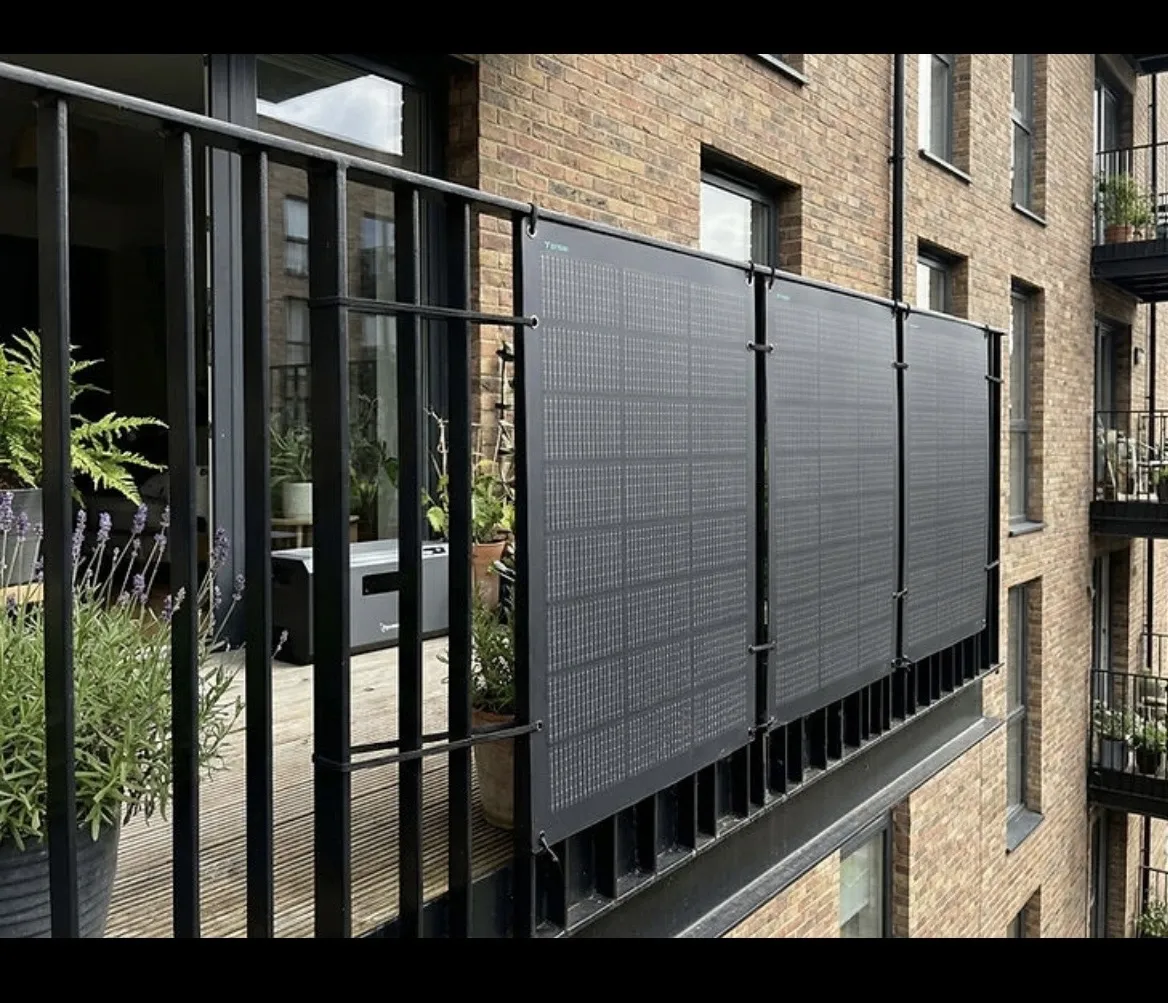
A plug-in solar system is a small, self-contained electricity generator that feeds power into your home's electrical circuit. A typical kit includes two solar panels (400W each), a microinverter that converts the panels' DC output to grid-compatible 230V AC, and mounting hardware. It is small enough for a balcony or wall, and in most cases light enough to take with you if you move.
Once connected, the system feeds electricity directly into your home circuit. Any appliance drawing power - your fridge, router, phone charger - uses the solar electricity first, reducing what you pull from the grid. Your electricity meter slows down. Your bill drops.
The concept is not new. Over one million households in Germany already run balcony solar systems. What's new is the UK catching up, with regulatory changes that make these systems legal, safe, and accessible for the first time.
This page is the long-form guide. For a shorter starting-point overview of plug-in solar, including the headline cost, legality and who-it-suits answers, see the plug-in solar explainer.
UK legality and the standards that govern it
Plug-in solar in the UK sits at the intersection of three separate standards. Headlines often blur them. Getting the picture right matters, because each standard does a different job.
How it got here: DESNZ confirmed the legalisation of plug-in solar via a written ministerial statement on 15 March 2026, and BS 7671:2018 + Amendment 4:2026 (published 15 April 2026) updated Section 712 to authorise plug-in solar via a standard plug for kits meeting the DESNZ Interim Product Specification, up to 800W AC peak. That specification was published as v2.0 on 16 July 2026, with batteries explicitly out of scope. Ofgem approved EREC G98 Issue 2 Amendment 1 on 11 August 2026, and SI 2026 No. 848 came into force on 27 August 2026. BS 1363-1:2023 still governs UK 13A plugs and sockets for all other uses, and A4 carves the exception for approved plug-in solar.
The position today, 15 September 2026, is simple. If your kit shows as Compliant on the ENA G98 Type Test Register, you may plug it into an ordinary 13A socket and self-notify your network operator afterwards. There is no electrician to book and no prior permission to seek. one hundred and nine kits from twenty-four manufacturers are listed as Compliant and 20 of them are on sale. A CPS-registered electrician with a hardwired connection to the consumer unit is required only for a kit that is not on that register. Check the register by model code before you buy, because a brand name alone does not tell you whether a particular kit is listed. For a dated, primary-source view of where each standard sits, see the BSI 2026 Plug-In Solar Tracker. Substantive corrections are logged on the changelog.
Costs and kit options
The kit most UK buyers should get
If you want the short answer before the detail below, start with the ENA G98 Type Test Register. A kit shown there as Compliant is the one you can plug in and self-notify, and the cheapest of those is £336. The EcoFlow STREAM range is widely sold in the UK but it is not on the register, so it is shown below under a separate heading.
Panels and a microinverter, no battery, inside the 800W cap. These are the formats built for the rules that came into force on 27 August 2026 under SI 2026 No. 848. one hundred and nine kits from twenty-four manufacturers now show as Compliant on the ENA G98 Type Test Register, 20 of them on sale, and the cheapest is £336 (City Plumbing, 940W). Check your model code on the register before buying, because that listing is what lets you plug in and self-notify.
City Plumbing 940W kit
Panels and a microinverter, no battery, listed as Compliant on the ENA G98 Type Test Register at £336. We have not tested it; the register listing is the thing to verify.
See the approved kit register →compare all UK kitsThe EcoFlow kits below are not on the ENA G98 Type Test Register, so they cannot be plugged in and self-notified. Batteries are also explicitly out of scope of the DESNZ Interim Product Specification v2.0, because the plug-in definition excludes devices designed to import electricity in order to store it for later. These are still legal to own and buy, they simply need a CPS-registered electrician for a fixed, hardwired install, or they work as portable units with no wiring at all.
EcoFlow STREAM Pro 1.92 kWh
Kit with battery built in: 800W in, 1200W AC out, stack to 11.52 kWh, smart time-of-use.
Latest price at EcoFlow →also on Amazon UKEcoFlow STREAM Ultra X 3.84 kWh
Four panels, 3.84 kWh, expandable to 23 kWh. For a sunny spot with real daytime load.
Latest price at EcoFlow →also on Amazon UKCompare and size it up: all UK kits · battery storage · cheapest legal kits · savings calculator
Prices are time-of-writing references and change; the button shows the live price, never a promised one. Disclosed affiliate links: EcoFlow direct via Awin, Amazon UK. How we stay free.
Approved kits are now on sale in the UK, and EcoFlow STREAM kits are widely sold but are not on the ENA G98 Type Test Register. Use our free solar savings calculator to estimate how much you could save with a system tailored to your location and usage. It now accepts a UK postcode for a more location-aware estimate, using satellite irradiance from your actual coordinates rather than a national average. Read about the best plug-and-play solar panels available in the UK.
Why solar got this affordable, in a few minutes from Jenny Chase
Jenny Chase heads BloombergNEF's solar analysis team and has tracked the global solar market for nearly two decades. She is one of the most-cited authorities on solar costs and adoption, which is why this short TED talk lands so cleanly: the kit prices below are the consumer-end consequence of the curve she walks through.
Jenny Chase, BloombergNEF, at TED Countdown (October 2024).
The reason an approved kit now reaches £336 is not magic. It is the world price of a solar module falling by roughly 90% over the last decade. UK plug-in solar is the late, retail-shelf consequence of that drop, which is why the maths now works for a flat or a balcony, not just a south-facing roof.
Available kits
An approved kit includes everything needed to plug in and self-notify. Browse the kits on our products page, and check any model against the ENA G98 Type Test Register before buying.
If your kit is not on the register
A kit that is not listed as Compliant still needs a hardwired connection by a CPS-registered electrician, who charges £250 to £450. That route is unchanged. It is a choice, not a requirement, for anyone buying a listed kit.
Germany offers a useful reference point: basic 800W kits there cost £210 to £300. The UK market is now competitive, with prices continuing to adjust as more manufacturers clear the register.
Savings and payback
How much you save depends on three things: where your panels face, where in the UK you live, and how much of the generated electricity you use directly.
The Ofgem cap is 26.11p per kWh from 1 July to 30 September 2026, and 26.32p from 1 October 2026. East-facing or west-facing placements generate around 70 to 80 per cent of the figure above. The government's own estimate puts typical savings at £70 to £110. The higher end is achievable if you shift energy-heavy appliances to daylight hours.
Payback period
At an approved kit price of £336 and a modelled annual saving of about £124, the payback period is roughly 3.5 years. After that, you have an estimated 15 to 20 years of panel life generating effectively free electricity.
Get your free buyer's checklist
Approved kits are now on sale. Get a checklist and personalised recommendations for your home.
No spam. Quick checklist. Unsubscribe any time.
Renters and permissions
Under the Renters' Rights Act 2025, landlords in England and Wales cannot unreasonably refuse improvements that tenants want to make to a property. A plug-in solar system with no structural impact is a strong candidate for that protection.
A landlord's reasonable grounds for refusal are limited to genuine structural concerns about the balcony's integrity, listed building restrictions, or issues with the building's overall electrical capacity. Aesthetic preference alone is not considered reasonable refusal.
What to do in practice
Notify your landlord in writing before installing. A simple letter explaining the system is portable, requires no drilling, and can be removed when you leave is usually enough. If your landlord declines, ask for specific grounds in writing.
If you reach an impasse, Citizens Advice can advise on your rights under the Renters' Rights Act.
📘 Deep dive: We have a dedicated Renter's Guide to Plug-In Solar covering the Renters' Rights Act in detail, no-drill mounting options, how to write a landlord request, and what to do if refused.
How installation works
Since 27 August 2026 the route for most buyers is a kit listed as Compliant on the ENA G98 Type Test Register, plugged into an ordinary 13A socket and self-notified to the network operator afterwards. A CPS-registered electrician making a hardwired connection remains the route for any kit that is not listed. The steps below describe the work involved on each route.
Step 1: Mount the panels
Typical mounting points include balcony railings, garden fences, shed roofs, and south-facing walls. Most kits include adjustable brackets that clamp onto standard railings without drilling.
Step 2: Connect the microinverter
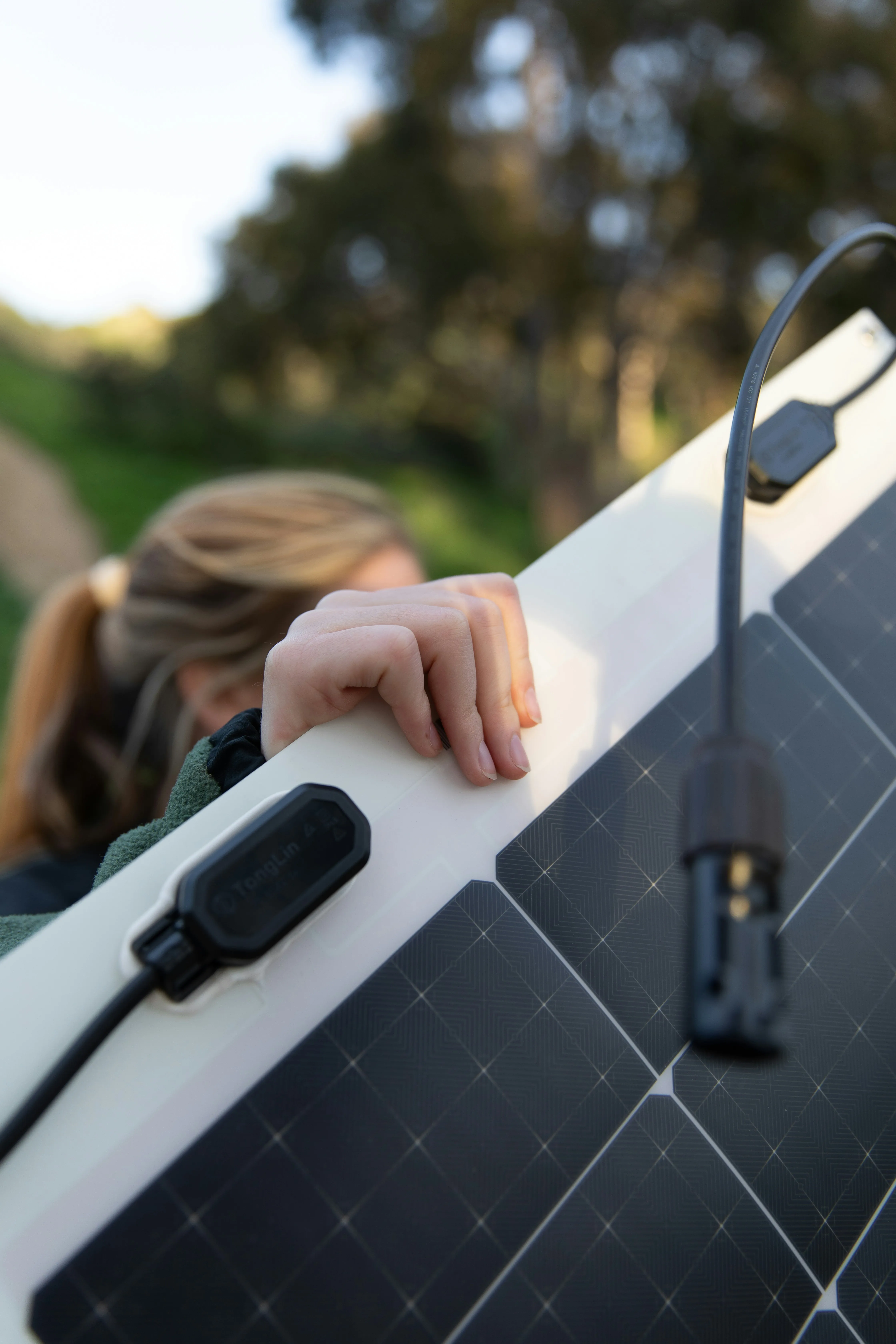
The panels connect to a microinverter via weatherproof MC4 connectors (they click together). The microinverter converts DC to grid-compatible 230V AC and includes automatic shutdown during power cuts.
Step 3: Plug in, or hardwire
If your kit shows as Compliant on the ENA G98 Type Test Register, plug the microinverter's output lead into an ordinary 13A socket. That is the whole electrical step. You then submit a G98 notification to your network operator afterwards, within 28 days. No electrician and no prior permission are needed. If your kit is not on the register, a CPS-registered electrician hardwires the AC output into your consumer unit instead, and the same G98 notification follows.
Choosing the right wattage
800W is the expected UK limit. For most households, two panels of 400W each is the right starting point. If your panels face different directions, you'll need a dual-input microinverter so each panel operates independently. Browse available kits to compare options.
DNO, insurance, and planning permission
Distribution Network Operator (DNO)
Your DNO owns the electricity cables in your street. At 800W, a plug-in system falls well under the G98 threshold of 3.68kW. Under G98, as amended by EREC G98 Issue 2 Amendment 1 (Ofgem approved 11 August 2026), you fit your system and notify your DNO within 28 days, and no prior approval is needed. With an approved kit you submit that notification yourself. For an unlisted kit your CPS-registered electrician or kit supplier can advise on the form.
Your DNO depends on your postcode: UKPN covers London and the South East, NGED the West Midlands, NPG the North East, and SSEN Scotland. The notification form takes around 15 minutes online.
💡 Step-by-step: See our G98 / DNO Notification Guide for the full list of UK DNOs by region, exactly what to include in your notification, and how to find the right form for your postcode.
Home insurance
Now that approved kits are on sale, a system listed as Compliant on the ENA G98 Type Test Register should be coverable under standard home insurance. Insurers may still be cautious about a kit that is not on the register. Either way, you must tell your insurer. Failure to disclose could invalidate a claim.
Planning permission
In most cases, you do not need planning permission. Learn about balcony solar as part of an energy resilience strategy. Small balcony installations fall within permitted development. Exceptions: listed buildings, conservation areas, and some leasehold properties.
UK performance and weather
Solar panels generate electricity from daylight, not direct sunshine. On overcast days, output drops to roughly 10–25% of peak capacity - but the system is still generating every daylight hour. That background output covers base loads like fridges, routers, and standby devices.
The UK's solar resource is comparable to northern Germany, where over a million balcony systems run effectively.

Shading matters more than weather
Partial shading from a railing or neighbouring building is a bigger performance issue than cloud cover. Shading can reduce output by 30–50%. Before buying, check your space for shade at different times using a free tool like SunCalc. Learn how we track the sun position to calculate accurate savings for your location.
Keeping panels clean
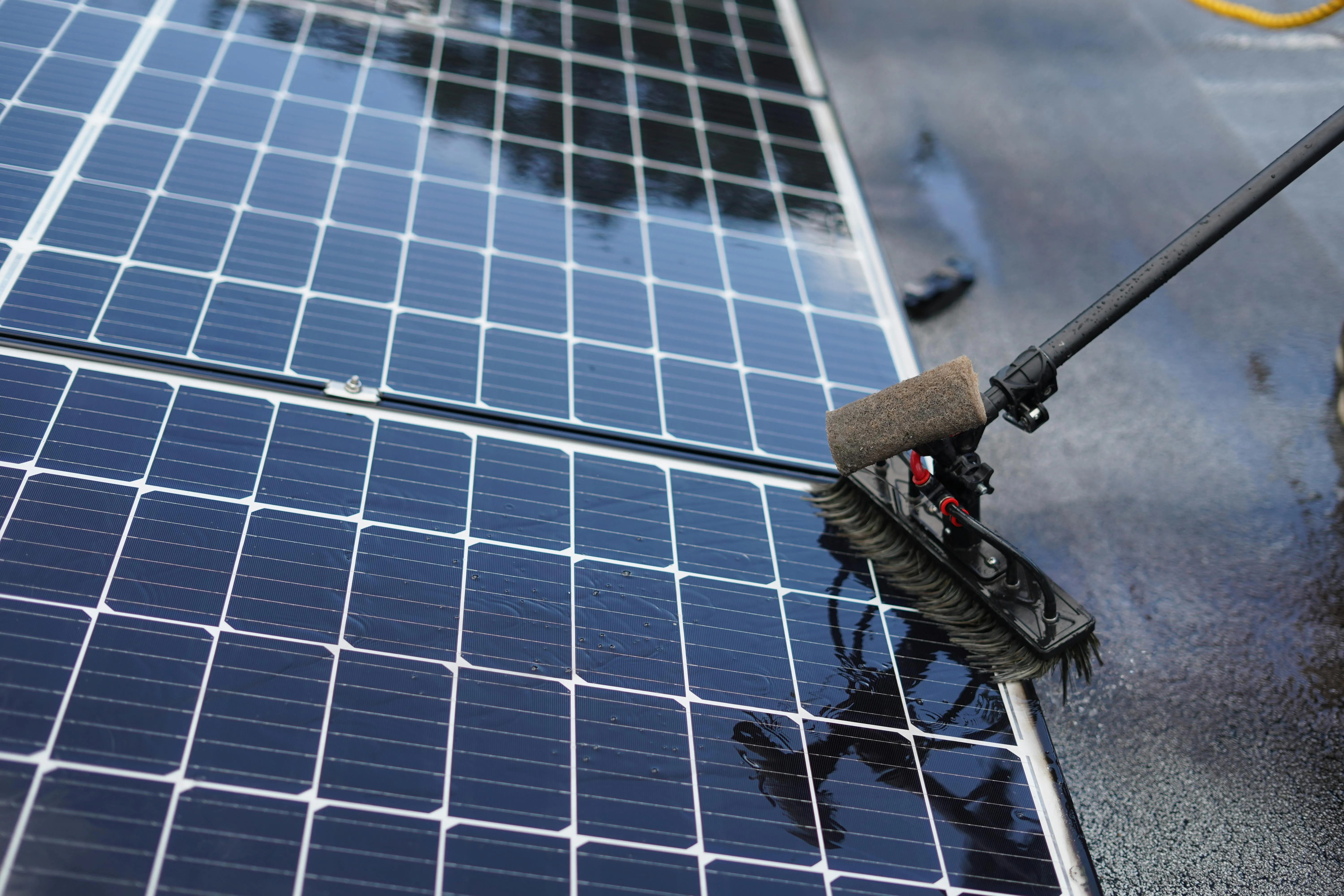
A quick rinse with a garden hose every couple of months is usually enough. Dust, bird droppings, and pollen can reduce output by up to 10% if left uncleaned. No harsh chemicals needed - plain water works.
Future of plug-in solar in the UK
See also: From Schuko to BSI: Germany's path and the UK route ahead, an investigative read on what EcoFlow's UK product page is signalling about the regulatory direction. And: Ofgem's 13% price cap rise from 1 July 2026, a first-person look at what the rise does to one household bill and where plug-in solar fits. And: Battery idle draw: the spec that decides how long your power lasts, why a low-idle battery can run a fridge eight hours longer on the same capacity. And: Solar panels that plug into a socket: what's legal in the UK, plus the solar noon calculator for sunrise, sunset and solar noon by city.
How the DIY route arrived, through product certification
For years the most-asked question about plug-in solar was whether the UK would ever allow a true DIY connection, without booking an electrician. The view among electricians and trade bodies was that it could, and that it might not even require BS 1363, the 13A plug and socket standard, to be rewritten. That is how it played out.
The argument is that if the inverter and the whole kit are certified to a strict product standard, the kit's own electronics can guarantee safe behaviour: it shuts its output down within a fraction of a second if the plug is loosened or the grid drops, so there is never a live pin to touch. That answers the single biggest safety worry about plug-in solar. A certified product would have to prove rapid shutdown, anti-islanding, automatic disconnect, no exposed live pins, export limiting, compliant voltage and frequency behaviour, and safe operation on ordinary ring circuits. Germany reached a workable plug-in connection by this kind of product-and-certification route rather than by declaring its sockets unsafe.
The conditions the industry expected are the conditions the UK kept: an 800W cap, approved kits only, a compliant and RCD-protected socket and circuit, DNO notification under G98, and no adaptors or extension-lead chains. DIY means "buy an approved kit and follow the label", not "plug anything in anywhere".
An honest scenario. Picture two tenants with the same 800W kit. In a modern flat with RCD protection on every circuit, the route is genuinely plug-and-register: connect to a compliant socket, notify the DNO, done. In a 1965 flat that has never been rewired and has no RCD on the kitchen ring, an approved kit still does not make that old circuit safe, so an electrician is needed first, to add protection. (See how RCBO protection works in a plug-in solar home.) Many older UK homes fall into the second case, so a DIY route would not be uniformly DIY.
Now settled. The scenario above stopped being a forecast on 27 August 2026, when SI 2026 No. 848 came into force, amending the Plugs and Sockets Regulations 1994, the ESQCR 2002 and G98 alongside the DESNZ Interim Product Specification v2.0 and EREC G98 Issue 2 Amendment 1. A kit shown as Compliant on the ENA G98 Type Test Register is now plugged in and self-notified, with no electrician. A CPS-registered electrician and a hardwired connection are needed only for a kit that is not on the register. We track the detail on the BSI 2026 Tracker.
Simplified DNO notification
Notification is already a "fit and notify" step you do yourself after plugging in. It may be removed entirely for approved sub-800W kits in future, reducing setup to a pure buy-and-plug experience.
Falling prices
German pricing suggests a floor of around £200–£300 for a basic 800W system. Battery-integrated kits will follow.
Smart export and grid integration
Future systems will likely support the Smart Export Guarantee (SEG), allowing you to sell surplus electricity back to the grid.
Higher wattage limits
The 800W limit aligns with the European standard. As grid infrastructure adapts, that threshold may increase.
Frequently asked questions
- No. Plug-in solar shuts down automatically during a power outage - a mandatory safety feature. For backup power, you'd need a separate battery with islanding capability.
- Potentially, through the Smart Export Guarantee. Early UK kits are designed for self-consumption. The financial case is built on using your own electricity rather than export income.
- Aesthetic preference alone isn't reasonable refusal under the Renters' Rights Act. Ask for specific grounds in writing. Citizens Advice can help you exercise your rights.
- Most modern panels carry a 25-year warranty and last 25–30 years. Degradation is under 0.5% per year. The microinverter may need replacing after 10–15 years (£60–£120).
See all frequently asked questions →
Conclusion
Plug-in solar represents a genuine shift in how UK households can interact with their energy supply. The economics are clear: a payback of roughly 3.5 years on the cheapest approved kit, followed by 15 to 20 years of free generation. The regulatory picture is settled. The renter protections are in place. The technology is proven.
The question is no longer whether you are allowed to plug one in. Since 27 August 2026 you are, provided the kit shows as Compliant on the ENA G98 Type Test Register. The remaining questions are which kit, where you will mount it, and how much of the output you will actually use.
Plug-in solar by home type and region
Different homes, different best spots. See the tailored guides for flats, terraced houses, semi-detached houses, and the garden, plus a local guide for Hampshire and the Isle of Wight.
Ready to start saving? Get your checklist.
Approved plug-in solar kits start at £336, and 20 of them are on sale today. Get the free buyer's checklist and personalised recommendations.
- ✓ Free buyer's checklist with what to check before buying
- ✓ Personalized savings estimate for your location
- ✓ Product recommendations from verified retailers
No spam. Quick checklist. Unsubscribe any time.
Further reading: New: Ed Miliband confirms plug-in solar for UK shops in 2026 · Best solar kits for UK renters · Is a plug-in solar battery worth it? · The cheapest plug-in solar kits you can legally buy · What Germany's balcony boom teaches UK buyers

